

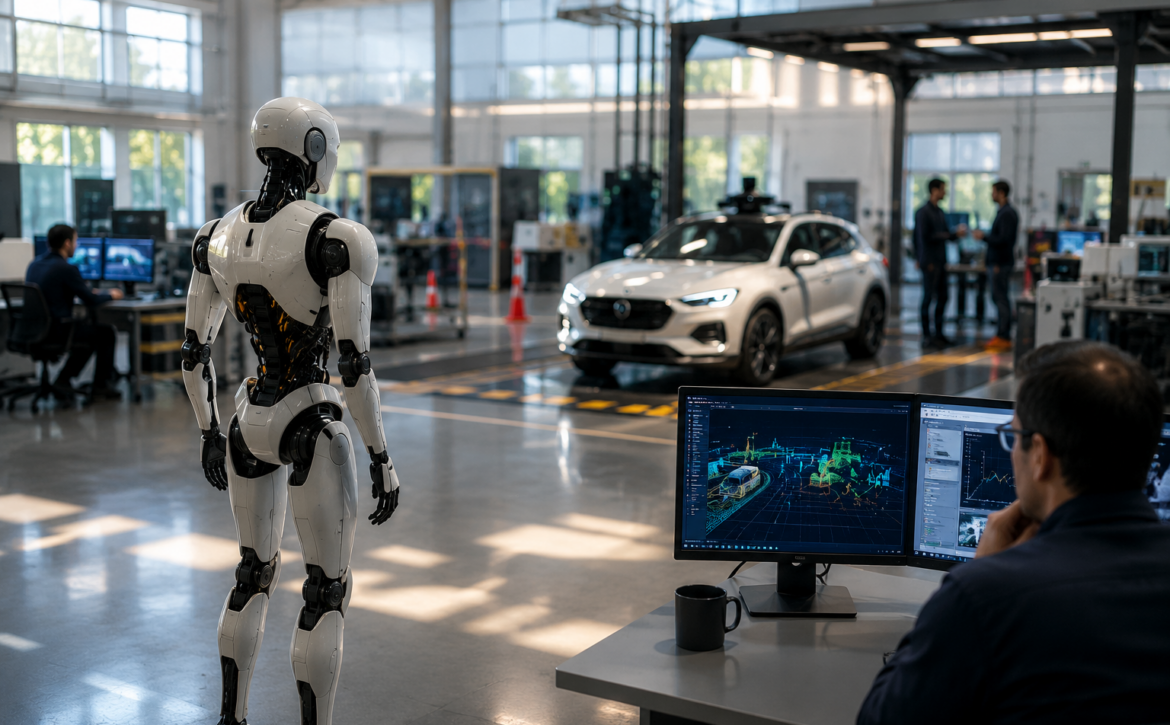
SRES SafeStack | July 2026
SRES SafeStack is the monthly newsletter from SecuRESafe (SRES), featuring expert insights on functional safety, AI assurance, cybersecurity, autonomous systems, and robotics. Each edition includes technical articles, industry developments, upcoming training opportunities, and company news.
Interested in applying these concepts within your organization? Explore our consulting services, view upcoming public training programs, or contact us at info@sres.ai.
Mid‑Year Reflections 2026: Expanding Safety, Deepening Impact
From Jody Nelson, SRES Co‑founder & Managing Partner
The first half of 2026 has taken off exactly where the second half of 2025 left us, on a strong and steady growth trajectory that continues to accelerate. If 2025 was about resilience and momentum, 2026 is proving to be the year where our core strengths in functional safety, autonomy safety, and AI safety have become essential to the growing domains of humanoids and physical AI systems.
The pace of innovation in this space is strikingly familiar. When we were consulting in autonomy back in 2013, we saw a similar shift. Work that had once been exploratory quickly turned into real programs with real deployment timelines and real safety expectations. Humanoids and physical AI systems are now entering that same phase. And just like autonomy in 2013, the standards landscape is still catching up. Only a small number of frameworks meaningfully address the specific safety needs of humanoids, which means companies must build rigorous processes even as the standards continue to evolve. The challenges are physical and dynamic, involving risks like instability, tipping, loss of balance, and unintended contact or collision with people. The work is complex, multidisciplinary, and increasingly consequential as these systems move closer to real deployment.
From Automotive to Humanoids: A Natural, If Not Perfect, Translation
Our roots in automotive safety have always demanded rigor: system level thinking, defensible engineering, and disciplined analysis. Humanoids are not a one-to-one comparison, but the underlying principles translate remarkably well.
This year, that translation has become a catalyst.
Our experience with functional safety, autonomy safety, and AI safety has allowed humanoid companies to move quickly while still building responsible, standards aligned systems. The same muscles we have developed over years, including structured hazard analysis, safety requirements development, AI behavior assurance, and safety case construction, are now enabling teams to accelerate without sacrificing rigor.
Deep Technical Work: 2026 in Practice
The first half of the year has been defined by hands-on, technically demanding work across traditional automotive, autonomy, robotics, and AI driven systems. Some of the most impactful efforts include:
- Conducting HARAs for autonomous vehicles and HRAs for humanoids and mobile robots, helping teams identify system level hazards early and build defensible safety strategies.
- Creating detailed safety requirements for autonomy stacks, manipulation systems, locomotion, and human interaction behaviors.
- Performing FMEDAs for automotive and robotics platforms, including multi core SoCs, sensor architectures, and actuator subsystems.
- Executing FI2TC analyses for perception and planning pipelines, especially where learning enabled components introduce uncertainty.
- Developing complete GSN safety case structures, from top level claims to evidence layers, for autonomous vehicle programs preparing for certification.
- Assessing DFMEAs and FMEDAs for OEM customers to ensure alignment with internal processes, industry standards, and certification expectations.
- Conducting an AI audit using ISO/PAS 8800, evaluating dataset governance, model behavior, and risk controls for learning enabled systems.
- Performing independent functional safety assessments and audits for autonomy, giving customers an objective evaluation of their safety processes, technical work products, and readiness for certification.
- Building FTAs for complex Level 4 autonomous truck architectures.
- Acting in the role of Safety Manager for multiple customers, guiding safety planning, process development, and cross functional alignment.
- Supporting customers through certification, including TÜV aligned training, safety case preparation, and audit readiness.
- Performing gap analyses against ISO 26262, ISO 21448, ISO/IEC TS 22440, ISO/PAS 8800, and emerging robotics safety frameworks.
- Developing company wide guidelines, templates, and safety processes, giving teams scalable and repeatable structures for safety engineering.
- Designing and delivering customized trainings, including new modules focused on humanoid safety, physical AI, and advanced autonomy safety techniques.
- Supporting companies in evaluating AI based tools, including policies for safe use, model governance, and risk mitigation.
- Contributing to ISO/IEC TS 22440 product development, helping shape the future of safety for learning enabled systems.
This work has been intense, rewarding, and deeply aligned with our mission: helping companies build safe, responsible, and trustworthy systems in a world where autonomy and AI are increasingly physical.
Training and Education: Meeting the Moment
Demand for practical, standards aligned training from experts continues to grow. In the first half of 2026, we delivered:
- 19 trainings across functional safety, autonomy safety, AI safety, and humanoid safety
- Multiple new modules tailored to customer safety processes and procedures
- Customized workshops embedded directly into customer safety roadmaps
We have now trained nearly 1,000 professionals since founding SRES, a milestone that reflects both industry need and the trust our customers place in our team.
A Team Built for Complex Problems
Humanoid systems require multidisciplinary thinking: mechanical, electrical, software, AI, safety, and human factors all woven together. I am incredibly proud of how our team has stepped into this challenge. Their ability to interpret ambiguity, translate standards, and build defensible safety strategies is what sets SRES apart.
Looking Ahead to the Rest of 2026
If the first half of the year has taught us anything, it is that the pace of change is not slowing. Humanoids are advancing faster than most predicted. AI systems are becoming more capable and more integrated into physical environments. And companies across industries are realizing that safety is not a constraint; it is a core enabler of progress.
We do not know exactly what the next six months will bring. But we do know how we will show up for it:
- With rigor and transparency
- With practical, real world engineering discipline
- With a commitment to responsible deployment
- And with gratitude for the customers, partners, and colleagues who make this work meaningful
SRES was built for moments like this, moments where industries shift, technologies evolve, and the need for grounded, defensible safety expertise becomes essential.
Thank you to everyone who has been part of our journey so far. Here is to a purposeful, innovative, and opportunity filled second half of 2026.
🔥 Join Us for Our Next Fireside Chat
Validation and Data in AI-Driven Systems
July 15, 2026 | 11:00 AM EDT
Join SRES partners Jody Nelson and Gokul Krithivasan alongside Visage Technologies experts Drago Špoljarić and Ivan Peris for a discussion on the evolving challenges of validation, simulation, synthetic data, and assurance for AI-enabled safety-critical systems across automotive, autonomy, and physical AI applications.
🔗 [Register here]
📍 SRES at #SafetyAD USA 2026
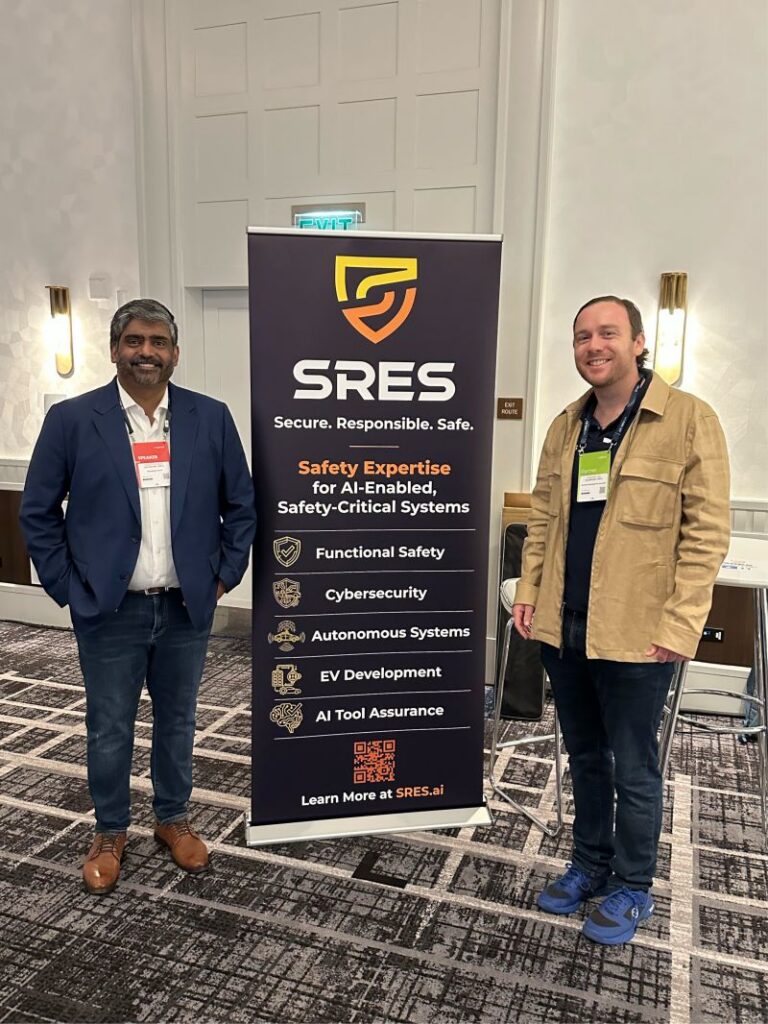
It was great connecting with so many familiar faces and meeting new ones at #SafetyAD in San Francisco. Gokul Krithivasan and Alex Dow spent two days discussing the evolving challenges of functional safety, cybersecurity, autonomous systems, EV development, and assurance of AI-based tools with engineers and leaders from across the industry. Thanks to everyone who stopped by the SRES booth to connect!
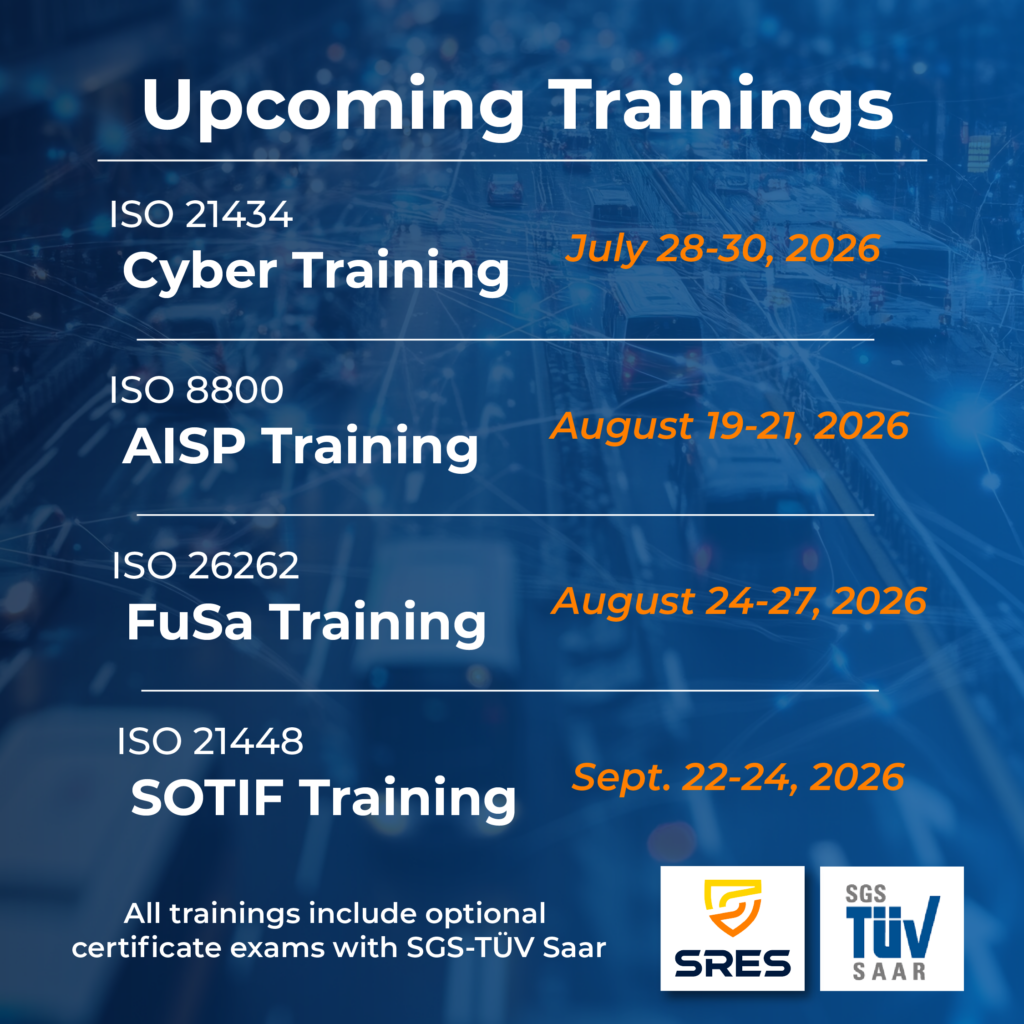
🚘 Upcoming Public Training Dates: ISO 21434, ISO 8800, ISO 26262 & ISO 21448
ISO 21434, Automotive Cybersecurity Training
July 28–30 – Build practical knowledge and application of ISO/SAE 21434:2021, the international standard for cybersecurity in road vehicles. This three-day live virtual course, led by SRES senior industry practitioners, combines lectures, interactive discussions, and practical exercises to help teams embed cybersecurity throughout the lifecycle of electrical and electronic systems — from concept development through production, operation, and decommissioning.
Attendees have the option to take the Certified Automotive Cybersecurity Professional (CACSP) certificate exam, accredited by SGS-TÜV Saar, on the afternoon of Day 3.
🔗 [Register Now]
ISO 8800, AI-Safety Professional (AISP) Training
June 24–26 – This three-day certification course equips participants to address the unique assurance challenges AI introduces in safety-critical automotive systems. It begins with foundational AI concepts, then builds toward how existing automotive safety standards like ISO 26262 and ISO 21448 can be extended using frameworks developed specifically for AI, including ISO/PAS 8800, ISO TS 5083, ISO/IEC 42001, and ISO/IEC TR 5469.
Attendees have the option to take the AISP (AI-Safety Professional) certificate exam, accredited by SGS-TÜV Saar, following the course.
🔗 [Register Now]
ISO 26262, Functional Safety Training
June 15–18 – Gain a complete understanding of the ISO 26262 standard and its practical application across the full safety lifecycle. This four-day live virtual course, led by SRES automotive safety experts, combines real-world examples, exercises, and discussion to help teams build confidence in developing and assessing safety-critical systems.
Attendees have the option to take the Automotive Functional Safety Professional (AFSP) certificate exam, accredited by SGS-TÜV Saar, following the course.
🔗 [Register Now]
ISO 21448, Safety Of The Intended Functionality (SOTIF) Training
May 5–7 – Learn how to apply ISO 21448 to identify functional insufficiencies, reduce unknown risks, and ensure safety in the absence of system faults. This three-day live virtual course, led by SRES automotive safety experts, focuses on practical strategies for integrating SOTIF with ISO 26262 in the development of ADAS and automated systems.
Attendees have the option to take the SOTIF Professional (SOTIFPRO) certificate exam, accredited by SGS-TÜV Saar, following the course.
🔗 [Register Now]
📘 Looking for a different kind of training support?
SRES also offers private and customized team training by request. Email us at info@sres.ai to discuss how we can support.
👉 [View All Training Options] 👉 [Why Teams Choose SRES Training]
🧠 New Technical Blogs

🤖 Beyond Standards: Why Humanoid Robot Safety Requires What No Framework Has Codified Yet
Explores why traditional functional safety standards alone are insufficient for humanoid robots. Explains how lessons from autonomous driving, including SOTIF and emerging AI safety standards, can help address the behavioral safety challenges of AI-enabled Physical AI systems.
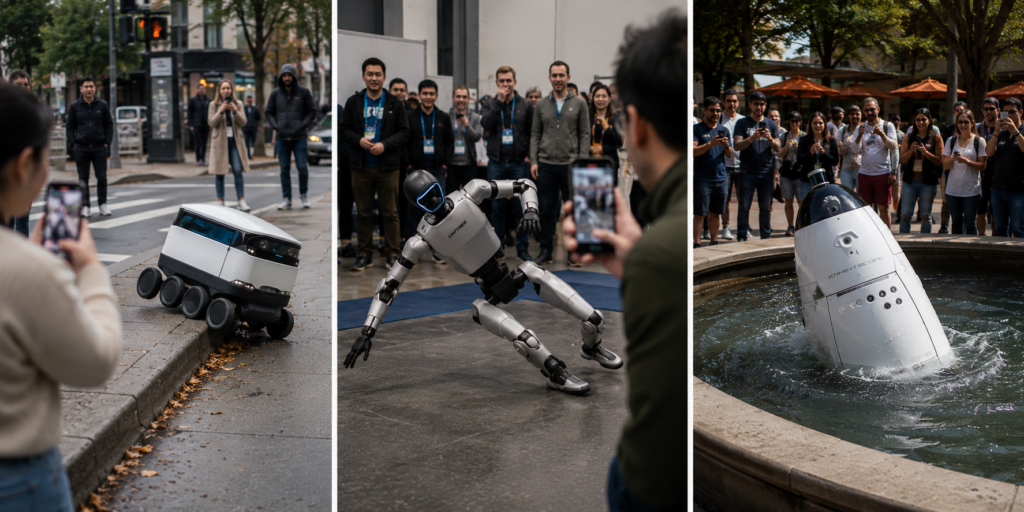
🦺 Safety: The Invisible Margin, Part 1 — Why Safety’s Value is Invisible by Design
Explains why safety engineering is chronically undervalued because its success is invisible—when safety works, nothing happens. Introduces the concept of safety as a “dynamic non-event” and explores why organizations struggle to recognize, fund, and sustain safety efforts as autonomous and humanoid robots move into everyday environments.
Thank you for reading this July edition of SafeStack. We hope you enjoyed this month’s updates. If you found our technical blogs valuable, consider joining one of our upcoming public training courses or registering for our next Fireside Chat with Visage Technologies.
As always, you can follow us on LinkedIn to stay connected between issues. We look forward to continuing the conversation.