

SRES SafeStack | September 2026
SRES SafeStack is the monthly newsletter from SecuRESafe (SRES), featuring expert insights on functional safety, AI assurance, cybersecurity, autonomous systems, and robotics. Each edition includes technical articles, industry developments, upcoming training opportunities, and company news.
Interested in applying these concepts within your organization? Explore our consulting services, view upcoming public training programs, or contact us at info@sres.ai.
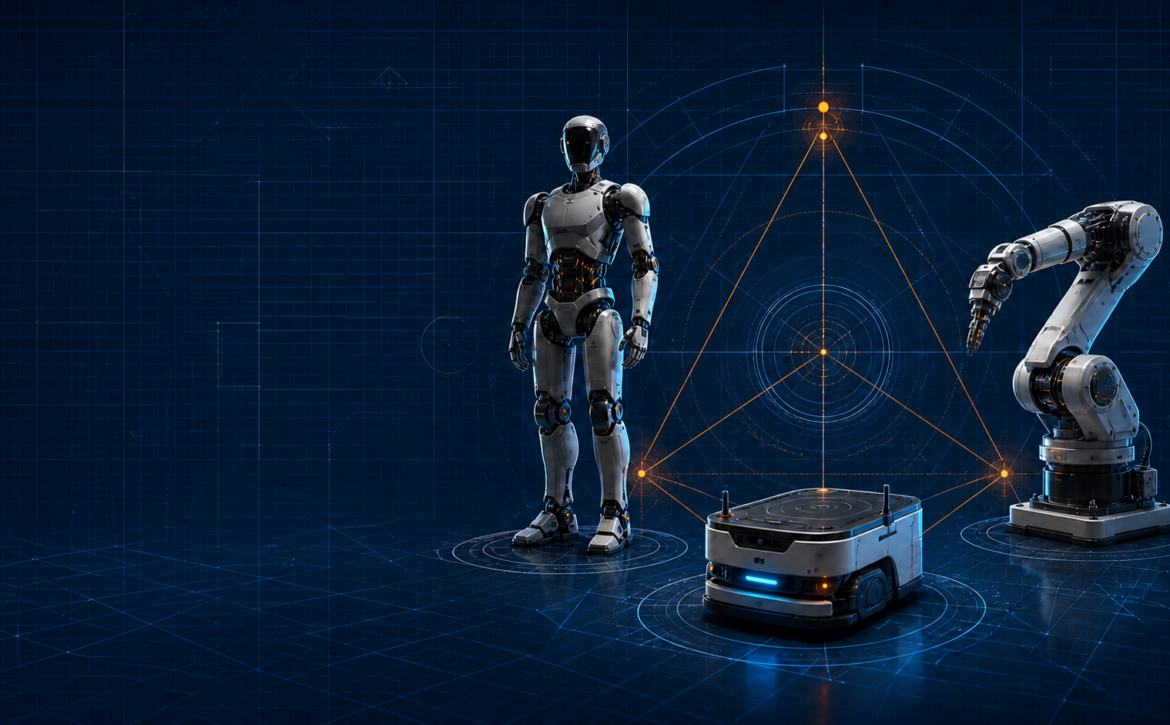
Humanoid and general-purpose robots are moving into factories, warehouses, commercial environments, public spaces, and homes. As mobility, manipulation, perception, AI-enabled behavior, and direct interaction with people converge in one product, how do you determine which safety standards are applicable and what additional evidence is needed to build a defensible safety case?
The September edition of SafeStack highlights our new practical guide to the safety standards landscape for humanoid and general-purpose robots. Keep reading for a look at the people and languages that make up the SRES team, upcoming public training opportunities, and our latest blog from a senior SRES consultant: “ISO 26262 Challenges for ADS: Item Definition and HARA.”
Safety Standards for Humanoid and General-Purpose Robots: A Practical Guide
The applicable framework depends on the robot’s intended tasks, operating environment, human-robot interaction, mobility, manipulation capabilities, use of AI, and target market. This guide explains how applicable standards fit together, what each does and does not address, how emerging standards may fit into the evolving landscape, and where additional engineering evidence is needed.
The guide walks through:
- Global vs. U.S. standards: ISO/IEC, ANSI, and UL in robotics
- The core standards landscape: risk assessment; industrial robots; industrial mobile robots and emerging mobile-manipulator standards; dynamically stable industrial mobile robots; service and public-facing robots; and functional safety
- AI safety beyond faults: functional insufficiencies, triggering conditions, and system misbehavior
- Cybersecurity and market requirements: including IEC 62443, the EU Cyber Resilience Act, the EU AI Act, and the EU Machinery Regulation
- Building a coherent safety framework: including safety cases and Goal Structuring Notation (GSN)
- Four example safety pathways: fixed industrial robots in safeguarded cells; general-purpose mobile manipulators in manufacturing or logistics; industrial humanoids sharing a workspace; and residential or public-facing humanoids
Looking to go deeper? Join SRES Physical AI Safety Week, September 14–18, for IEC 61508 Functional Safety Training and ISO/IEC TS 22440 Functional Safety and AI Systems Training.
🌍 More Than One Way to Say Hello
Hello · مرحبًا · Hallo · નમસ્તે · नमस्ते · Cześć · Hola · வணக்கம் · Merhaba
These greetings represent the nine languages spoken across the SRES team: English, Arabic, German, Gujarati, Hindi, Polish, Spanish, Tamil, and Turkish. Our colleagues are based across the United States, Mexico, Canada, and Germany.
Language is only one part of a person’s story, but it is a visible reminder that people do not all come to the same conversation with the same experiences or points of view.
At SRES, we strive to create an environment where everyone feels comfortable sharing their ideas and opinions, and where respect for one another’s values and ideas is essential. An international team is not only about locations and languages. It is about making room for people to bring their unique perspectives to the work.
Interested in joining the SRES team?
📅 Upcoming Public Training
⚙️ IEC 61508 Functional Safety Training, September 14–16
Gain a practical understanding of IEC 61508 and its application across the functional safety lifecycle for safety-critical electrical, electronic, and programmable electronic systems, including Physical AI. This three-day live virtual course covers hazard and risk analysis, safety requirements, systematic integrity, hardware and software development, FMEDA, common-cause failure, testing, and supporting processes.
Attendees have the option to take the Industrial Functional Safety Professional (IFSP) certificate exam, accredited by SGS-TÜV Saar, following the course.
🤖 ISO/IEC TS 22440, Functional Safety and AI Systems Training, September 17–18
Explore the emerging approach to functional safety for AI systems and the additional challenges introduced by data-dependent and difficult-to-predict behavior. This two-day live virtual course examines the AI safety lifecycle, hazard and fault analysis, architectural mitigations, data quality, validation, runtime monitoring, and AI-based development tools. ISO/IEC TS 22440 remains under development, and the course content may evolve as the standard progresses.
🚘 ISO 21448, Safety of the Intended Functionality (SOTIF) Training, September 22–24
Learn how to apply ISO 21448 to identify functional insufficiencies, reduce unknown risks, and address hazards that can arise when a system is functioning as designed. This three-day live virtual course, led by SRES automotive safety experts, focuses on the practical application of SOTIF alongside ISO 26262 in the development of ADAS and automated systems.
Attendees have the option to take the SOTIF Professional (SOTIFPRO) certificate exam, accredited by SGS-TÜV Saar, during the final training day.
📘 Looking for a Different Kind of Training Support?
SRES also offers private and customized team training by request. Email us at info@sres.ai to discuss how we can support.
👉 View all training options 👉 Why teams choose SRES training
💡 Latest SRES Insights
ISO 26262 Challenges for ADS: Item Definition and HARA
Explore why SAE Level 4 automated driving systems challenge conventional ISO 26262 item definitions and HARA controllability assumptions when there is no human driver available as a fallback. The article also examines practical approaches to functional decomposition, fail-operational capability, and minimal risk conditions.
Thank you for reading the September edition of SafeStack. This month, we explored the safety standards landscape for humanoid and general-purpose robots, examined ISO 26262 challenges for SAE Level 4 automated driving systems, and shared upcoming training opportunities across IEC 61508, ISO/IEC TS 22440, and SOTIF.
Be sure to follow SRES on LinkedIn for insights and updates between editions. We look forward to continuing the conversation next month.